
Description
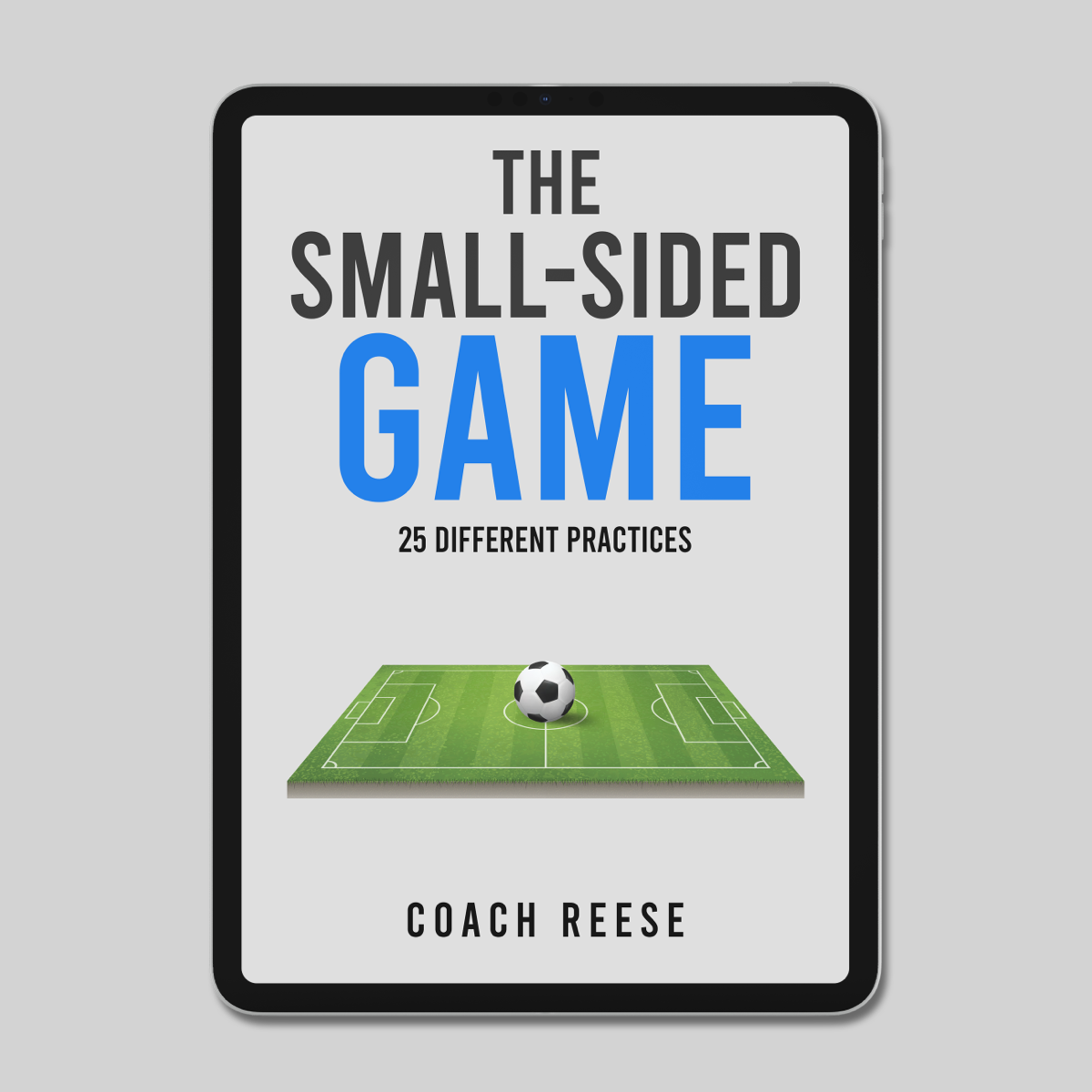
25 SMALL-SIDED GAMES
Play. Develop. Improve.
25 practical, tested small-sided games designed to develop every player.
Looking for practices that are simple to understand, easy to organise and challenging enough to develop your players?
Want games that encourage players to think, decide, compete and play?
How can small-sided games develop technical ability?
How can they improve tactical understanding?
How can they encourage better decision-making?
How can they develop players physically while keeping the ball at the heart of the practice?
And how can one game develop multiple areas of performance at the same time?
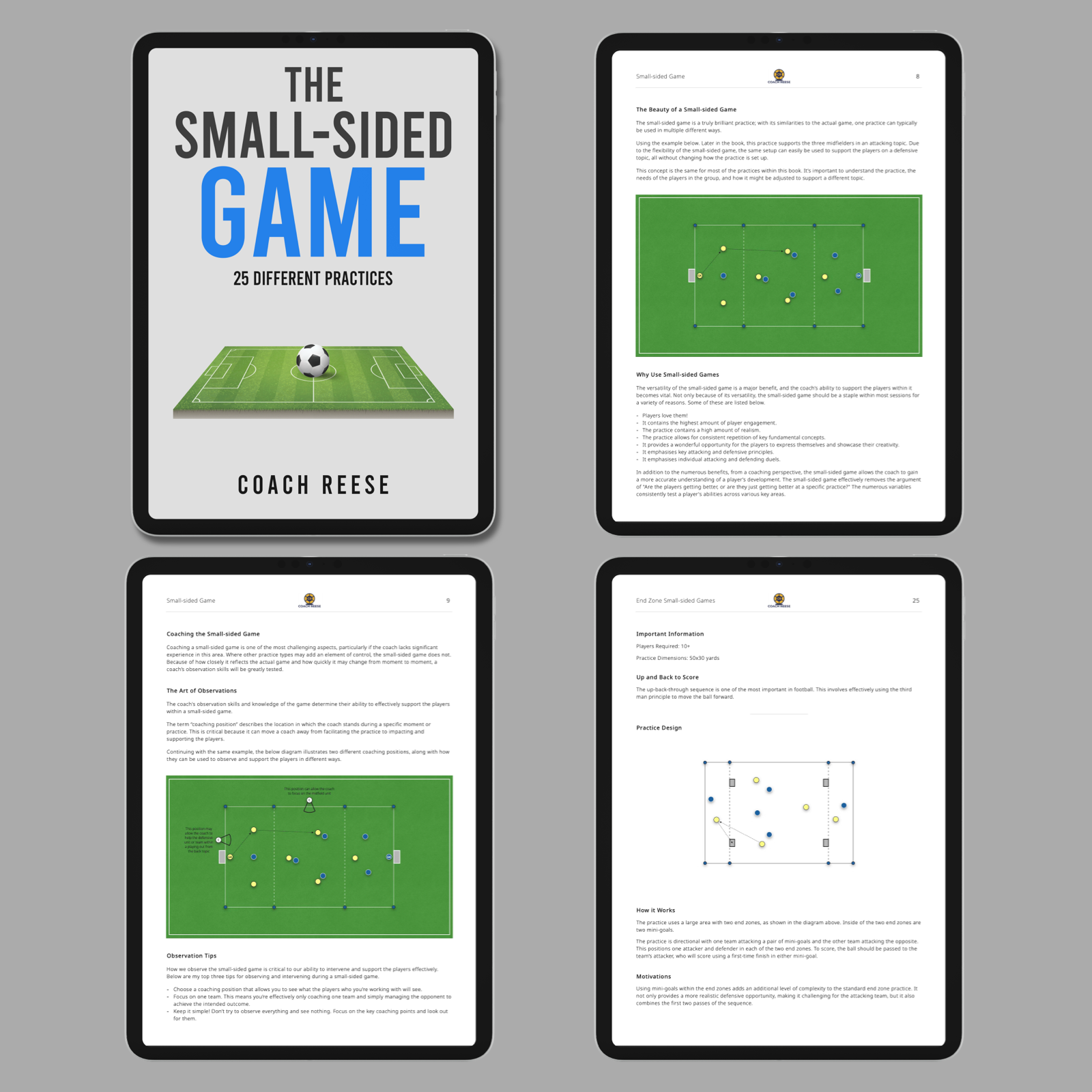
This book provides 25 practical, tested small-sided games designed to support the development of the whole player.
Written by a professional football coach and coach developer, these practices are designed to be used in real coaching environments — with clear objectives, realistic challenges and opportunities for players to learn through the game.
MORE THAN JUST SMALL-SIDED GAMES
Small-sided games are more than simply playing football with fewer players.
They can create opportunities for players to:
- Have more touches
- Make more decisions
- Attack and defend repeatedly
- Experience realistic game situations
- Solve problems
- Develop technical skills under pressure
- Understand space
- Combine with teammates
- Compete
- Transition quickly
- Take responsibility
The right game can develop multiple components of performance at the same time.
This book is built around that idea.
25 PRACTICAL, TESTED GAMES
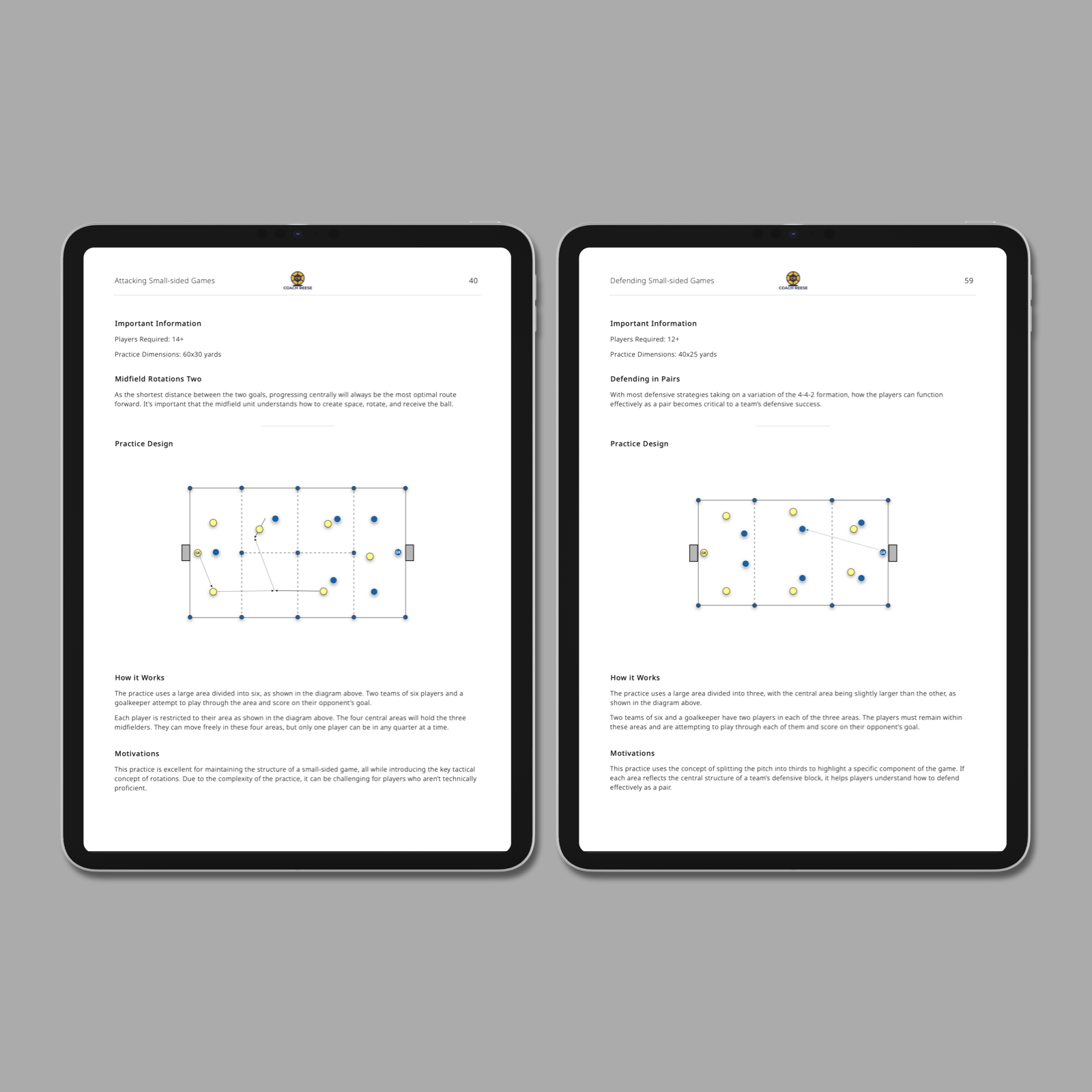
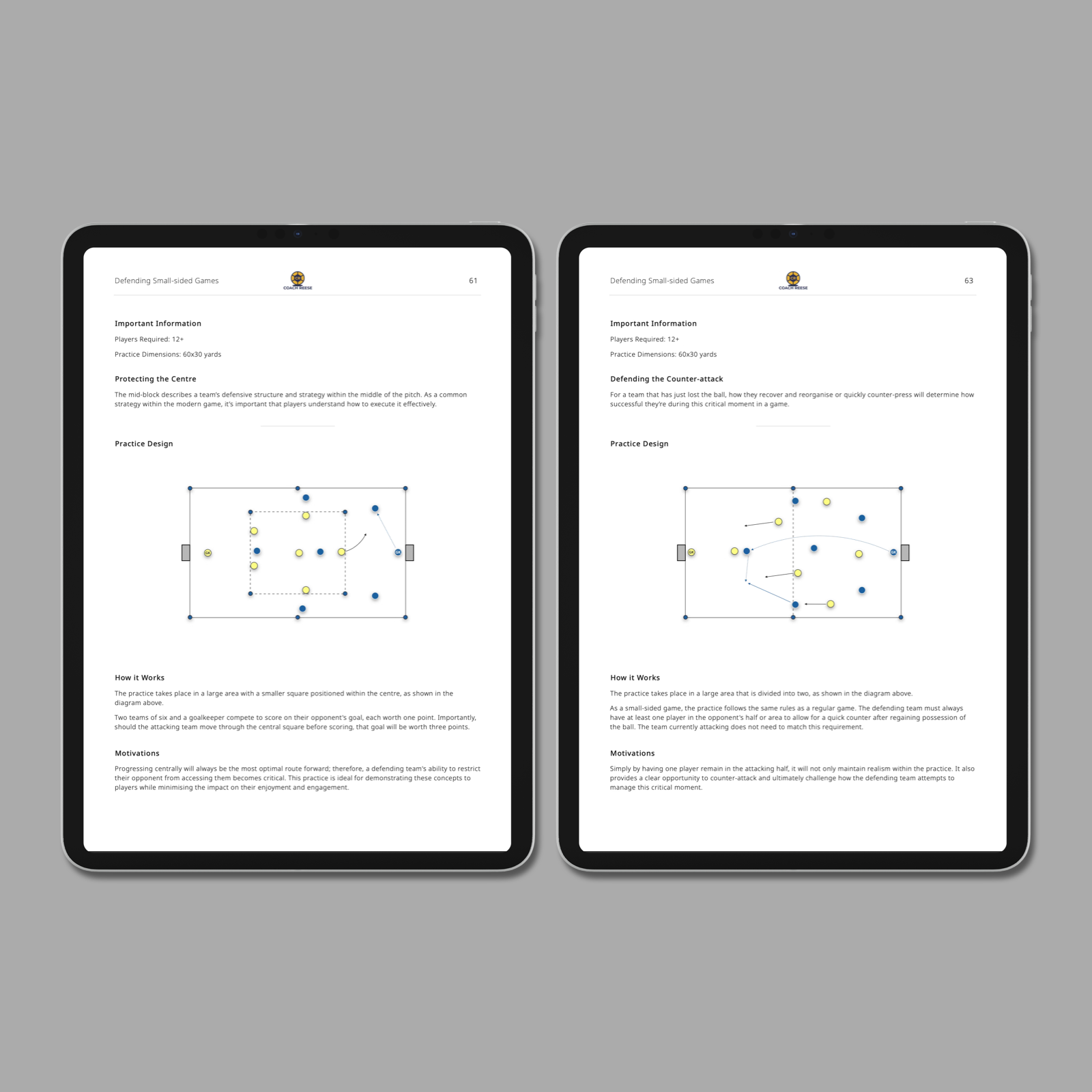
The book contains 25 small-sided games that have been designed with practical coaching in mind.
Each game provides a different challenge.
Different numbers.
Different spaces.
Different rules.
Different objectives.
Different problems to solve.
Different opportunities to develop.
The practices can be adapted to suit different ages, abilities, environments and coaching objectives.
Simple enough to use. Challenging enough to develop.
DEVELOP THE WHOLE PLAYER
Football development isn’t just about technique.
Players need to develop across every area of performance.
These games provide opportunities to develop:
TECHNICAL
Passing.
Receiving.
First touch.
Dribbling.
Ball carrying.
Finishing.
1v1 ability.
Defending.
TACTICAL
Space.
Positioning.
Support.
Movement.
Creating advantages.
Defending space.
Pressing.
Transitions.
Game understanding.
PHYSICAL
Acceleration.
Deceleration.
Changes of direction.
Repeated actions.
Speed.
Agility.
Strength.
Endurance.
PSYCHOLOGICAL
Decision-making.
Concentration.
Confidence.
Problem-solving.
Resilience.
Composure.
SOCIAL
Communication.
Cooperation.
Competition.
Responsibility.
Teamwork.
Develop the player, not just the skill.
PLAYERS LEARN THROUGH THE GAME
The best learning environments give players opportunities to experience football problems rather than simply being told the answers.
Small-sided games create those opportunities.
Players have to:
See.
Think.
Decide.
Act.
Adapt.
React.
And then do it again.
The game provides the context.
The coach provides the environment.
The player finds the solution.
TECHNICAL DEVELOPMENT
Small-sided games can create high levels of technical involvement.
Players have opportunities to:
- Receive under pressure
- Pass through opponents
- Protect possession
- Carry the ball
- Dribble
- Combine
- Finish
- Defend 1v1
- Intercept
- Control and play quickly
Technical actions happen within the context of the game, with opponents, teammates, space and pressure influencing every decision.
TACTICAL DEVELOPMENT
Players don’t just need to know how to perform an action.
They need to understand when, where and why.
The games encourage players to recognise:
- When to pass
- When to carry
- When to dribble
- When to support
- When to move away
- When to penetrate
- When to press
- When to recover
- When to protect space
- When to transition
Develop tactical understanding through real football problems.
DECISION-MAKING
Every game presents players with choices.
Pass or carry?
Dribble or combine?
Support or penetrate?
Press or recover?
Play forward or secure possession?
Attack the space or create space for someone else?
Players learn to make decisions based on the information available to them.
The aim isn’t simply to produce players who can perform techniques.
It’s to develop players who can choose the right action at the right moment.
SMALL-SIDED. BIG LEARNING.
Reducing the number of players can increase involvement.
More touches.
More decisions.
More attacking actions.
More defensive actions.
More transitions.
More opportunities to solve problems.
More opportunities to learn.
Small-sided games can create an environment where players are constantly involved in the game.
THE 25 GAMES
The practices cover a broad range of football problems and development objectives.
Expect games that challenge players to:
KEEP THE BALL
Can your team maintain possession under pressure?
PLAY FORWARD
Can players recognise opportunities to penetrate?
CREATE SPACE
Can players use movement and positioning to create opportunities?
EXPLOIT SPACE
Can players recognise and attack available space?
COMBINE
Can players connect with teammates to overcome opponents?
ATTACK 1V1
Can players create and exploit individual advantages?
DEFEND 1V1
Can players delay, direct and regain possession?
PRESS
Can players recognise when and how to press?
TRANSITION
Can players react quickly when possession changes?
FINISH
Can players turn attacking opportunities into goals?
Each game provides a different problem for players to solve.
GAME-BASED DEVELOPMENT
The practices are designed around the reality of football.
Players don’t perform skills in isolation during a match.
They perform them while:
- Under pressure
- Moving
- Scanning
- Communicating
- Competing
- Making decisions
- Responding to teammates
- Responding to opponents
- Managing space
- Reacting to transitions
These games bring those demands into the training environment.
THE COACH’S ROLE
Small-sided games don’t mean the coach becomes irrelevant.
The coach creates the environment.
The coach observes.
The coach identifies learning opportunities.
The coach asks questions.
The coach provides feedback.
The coach can manipulate the practice through:
- Pitch size
- Player numbers
- Scoring systems
- Conditions
- Rules
- Direction
- Targets
- Time
- Numerical advantages
Small changes can create very different learning problems.
ADAPTABLE TO YOUR PLAYERS
Not every group is the same.
Players have different:
Ages.
Abilities.
Experiences.
Needs.
Strengths.
Areas for development.
The games can be adapted to create the right challenge for the players in front of you.
Make the practice easier.
Make it harder.
Increase the space.
Reduce the space.
Add a player.
Remove a player.
Change the scoring.
Change the objective.
Keep the game — change the challenge.
FOR EVERY PLAYER
The games are designed to support the development of all players.
Whether you’re working with:
Grassroots players.
Academy players.
Youth teams.
Development squads.
Senior players.
The principles remain the same:
Create the environment.
Present the problem.
Let the players play.
Help them learn.
Challenge them to improve.
FOR COACHES WHO WANT PRACTICAL PRACTICES
No complicated theory.
No endless explanations.
Just practical games that can be taken onto the training pitch.
Use them as:
- Main practices
- Game-based practices
- Technical-tactical activities
- Development games
- Conditioned games
- Warm-up games
- Competitive games
- Session components
Adapt them to your environment and your players.
FROM PRACTICE TO PERFORMANCE
The ultimate purpose of training is to improve performance.
Small-sided games can help bridge the gap between isolated practice and the demands of the real game.
Players have to:
Perceive.
Decide.
Execute.
Compete.
Adapt.
Repeat.
The closer the practice reflects the demands of football, the more opportunities players have to develop behaviours that transfer into the game.
WATCH YOUR PLAYERS DEVELOP
Use the games to observe more than just whether a player completes a pass or scores a goal.
Look for:
How they position themselves.
What they see.
What decisions they make.
How they respond to pressure.
How they support teammates.
How they react after losing possession.
How they defend.
How they communicate.
How they solve problems.
The games provide the coach with a window into the player.
COMPETITION MATTERS
Players enjoy competing.
And competition creates another layer of challenge.
Who can win?
Who can protect the ball?
Who can score?
Who can stop the opponent?
Who reacts first?
Who makes the right decision under pressure?
Use competition to create intensity, engagement and learning.
25 GAMES. COUNTLESS POSSIBILITIES.
The value of a small-sided game isn’t limited to the first time you use it.
Change the players.
Change the pitch.
Change the numbers.
Change the rules.
Change the scoring system.
Change the objective.
Change the level of challenge.
One practice can create multiple learning environments.
PRACTICAL. TESTED. READY TO USE.
These aren’t theoretical exercises designed only for a coaching manual.
They are practical, tested games designed for the realities of football coaching.
They can be taken from the page and onto the pitch.
Use them.
Adapt them.
Challenge your players.
Observe what happens.
And keep developing.
TRUSTED BY PROFESSIONALS
The author’s eBooks are already being used and endorsed by professionals from the game.
Including:
Danny Röhl — Football Manager
Gaël Clichy — Former Manchester City & Arsenal player, Coach
Yohan Cabaye — Former Newcastle United & PSG player, Coach
Martin Devaney — Assistant Manager, Barnsley FC
Marlon Pack — Portsmouth Captain
Kenwyne Jones — Former Premier League player, Coach
Their use and support of the author’s work reflects the practical focus behind the books:
Football ideas that can be understood, applied and developed.
WRITTEN FROM THE PROFESSIONAL GAME
The author is a professional football coach and coach developer, bringing practical coaching experience and a passion for player development to every practice.
The result is a resource built around one simple idea:
Players develop by playing.
Create better games.
Create better learning environments.
Create better players.
PLAY. DEVELOP. IMPROVE.
25 practical games.
25 opportunities to learn.
Countless decisions.
Countless challenges.
One goal — develop the whole player.
25 SMALL-SIDED GAMES
25 practical, tested games designed to develop every player.
Technical development.
Tactical understanding.
Decision-making.
Physical development.
Psychological development.
Communication.
Teamwork.
Competition.
Game understanding.
For coaches. Players. Coach developers.
Create the game.
Challenge the player.
Develop the person.
Improve the footballer.
Get your copy today.
Reviews
There are no reviews yet.