Description
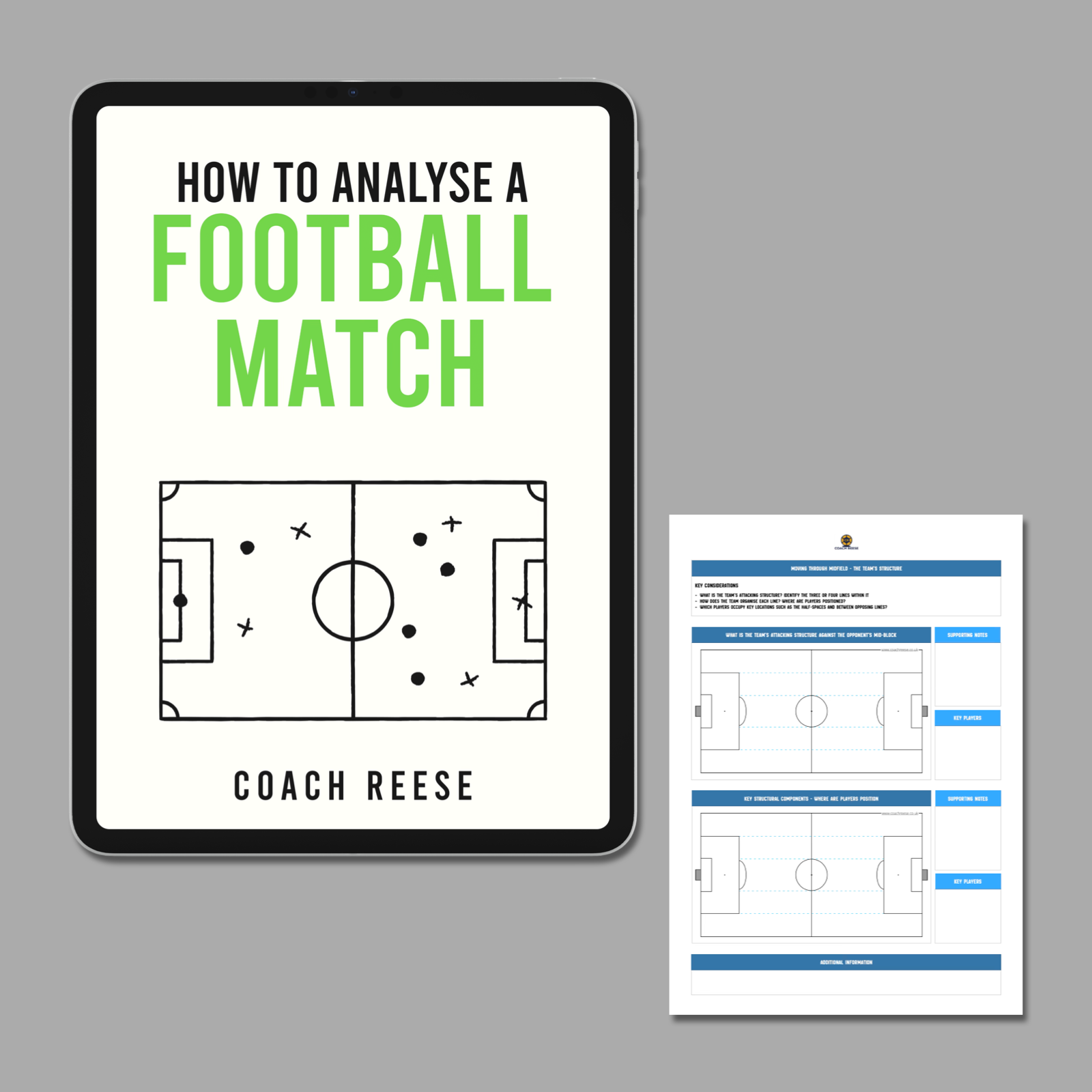
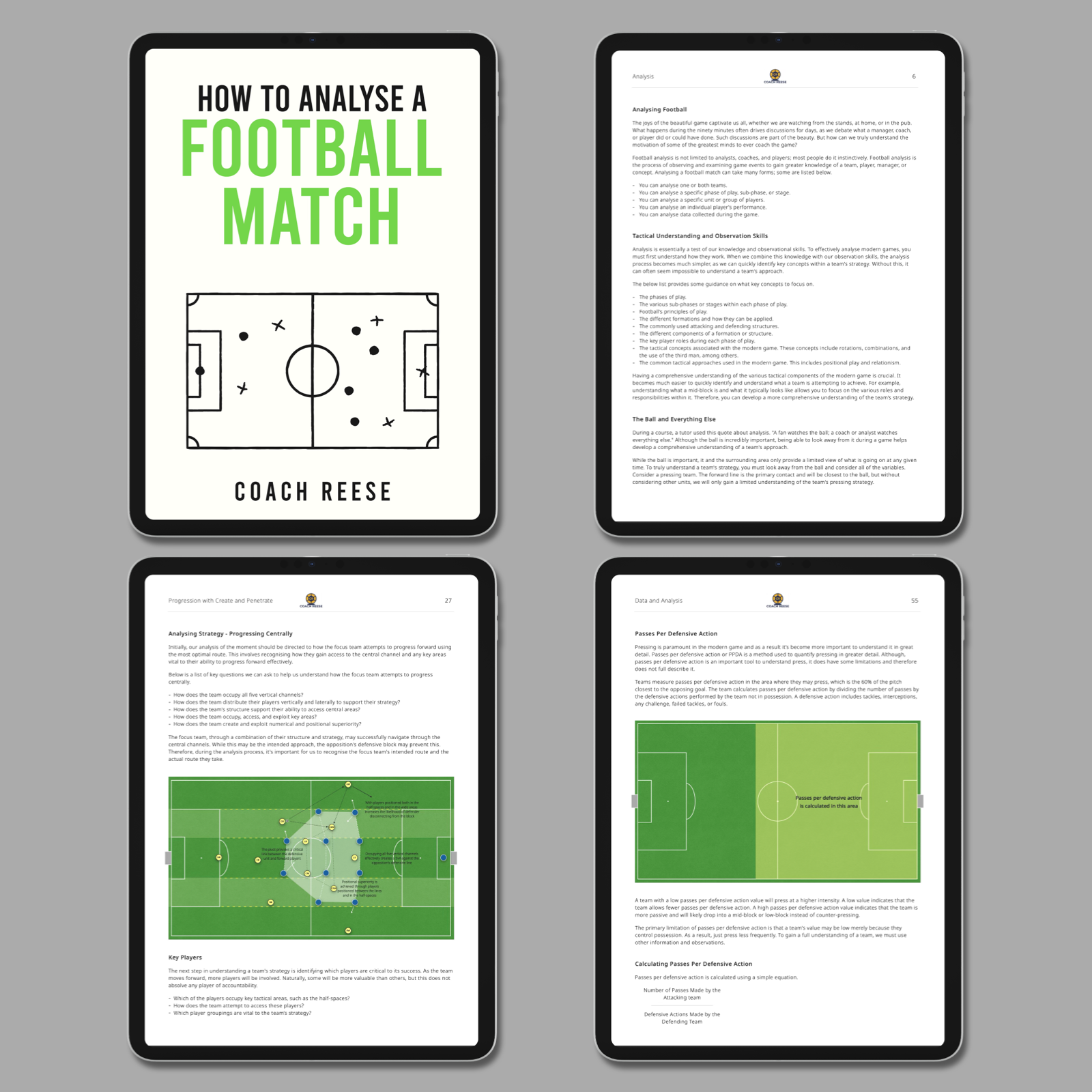
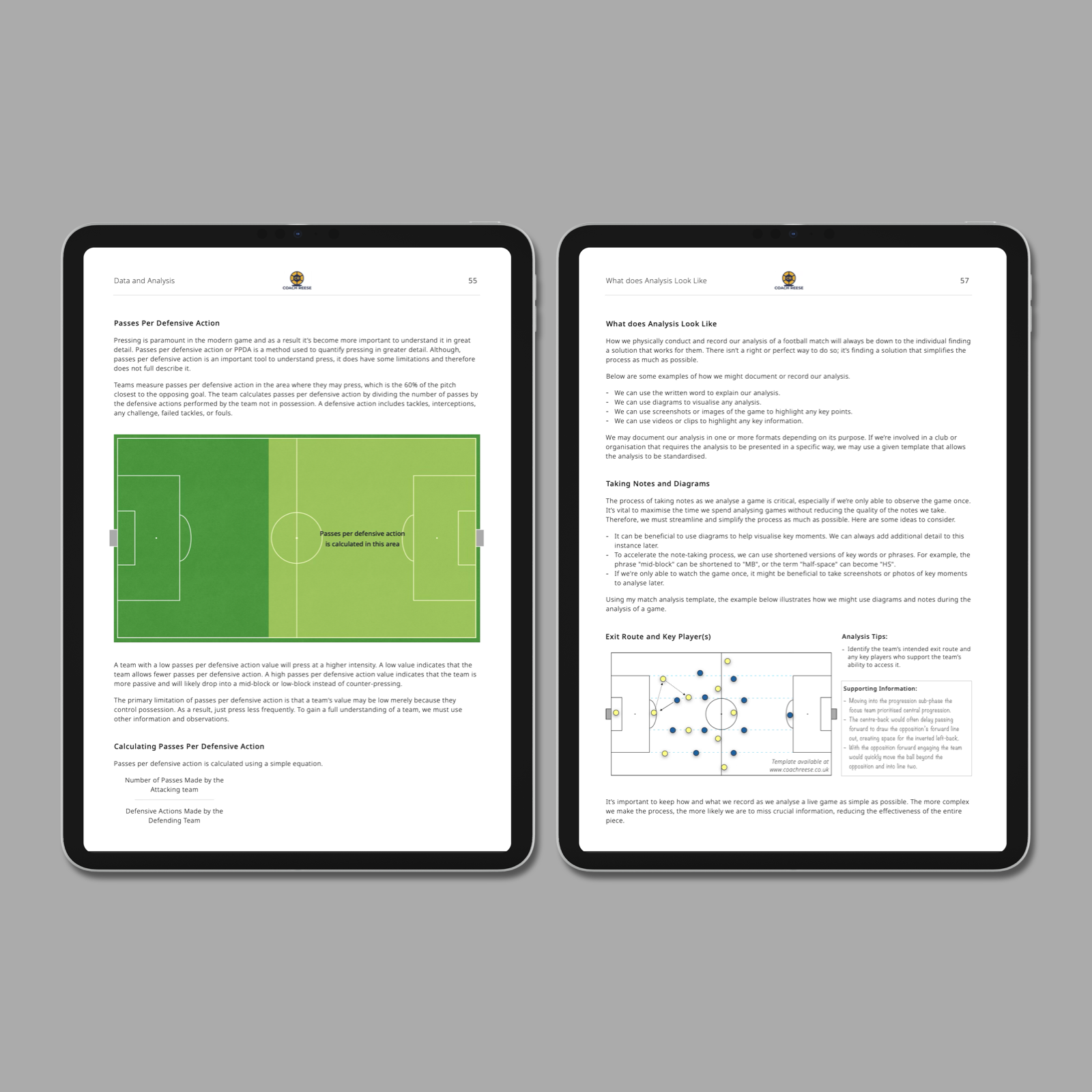
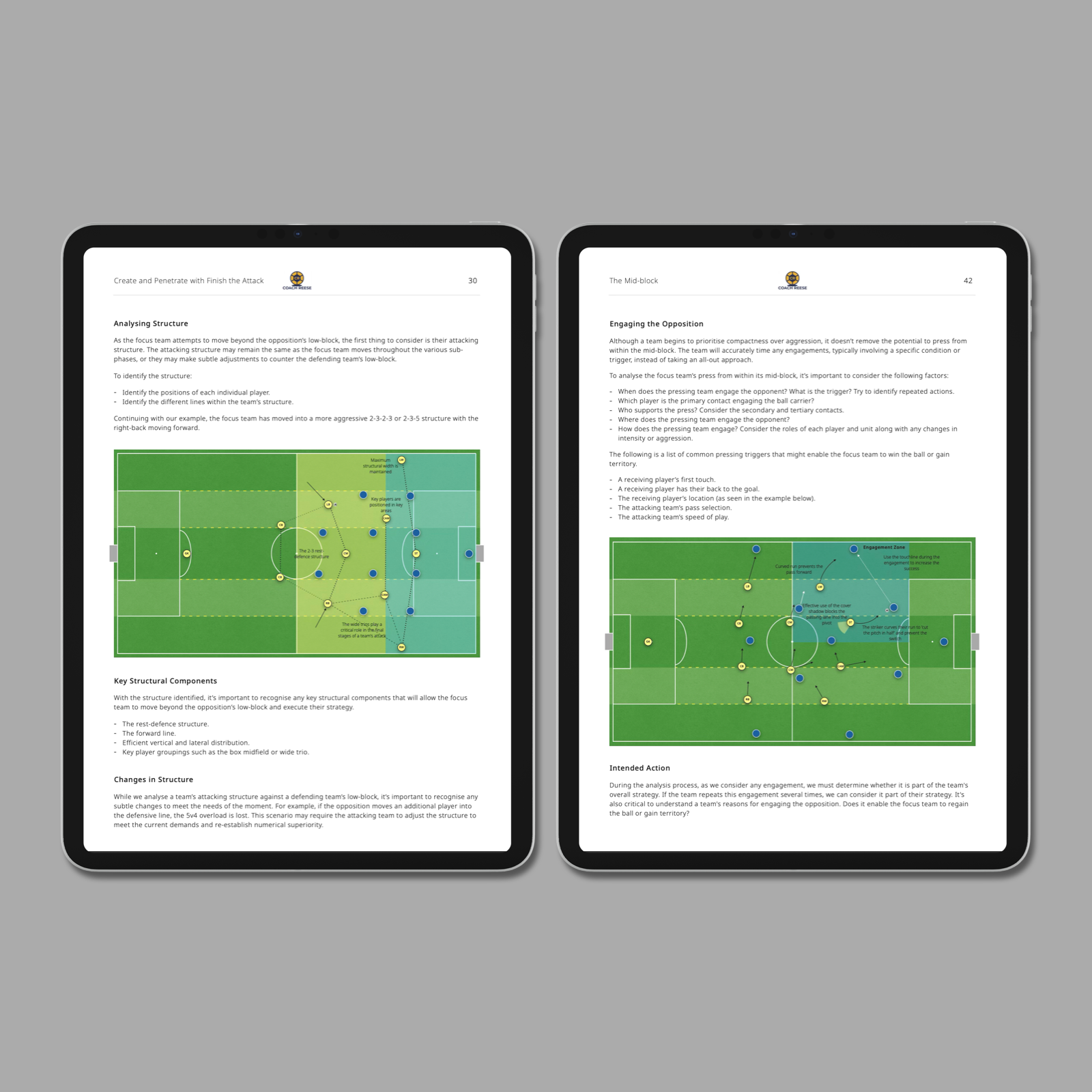
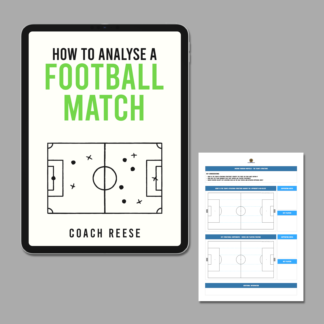
FOOTBALL MATCH ANALYSIS TEMPLATE
Watch the Game. Understand the Game.
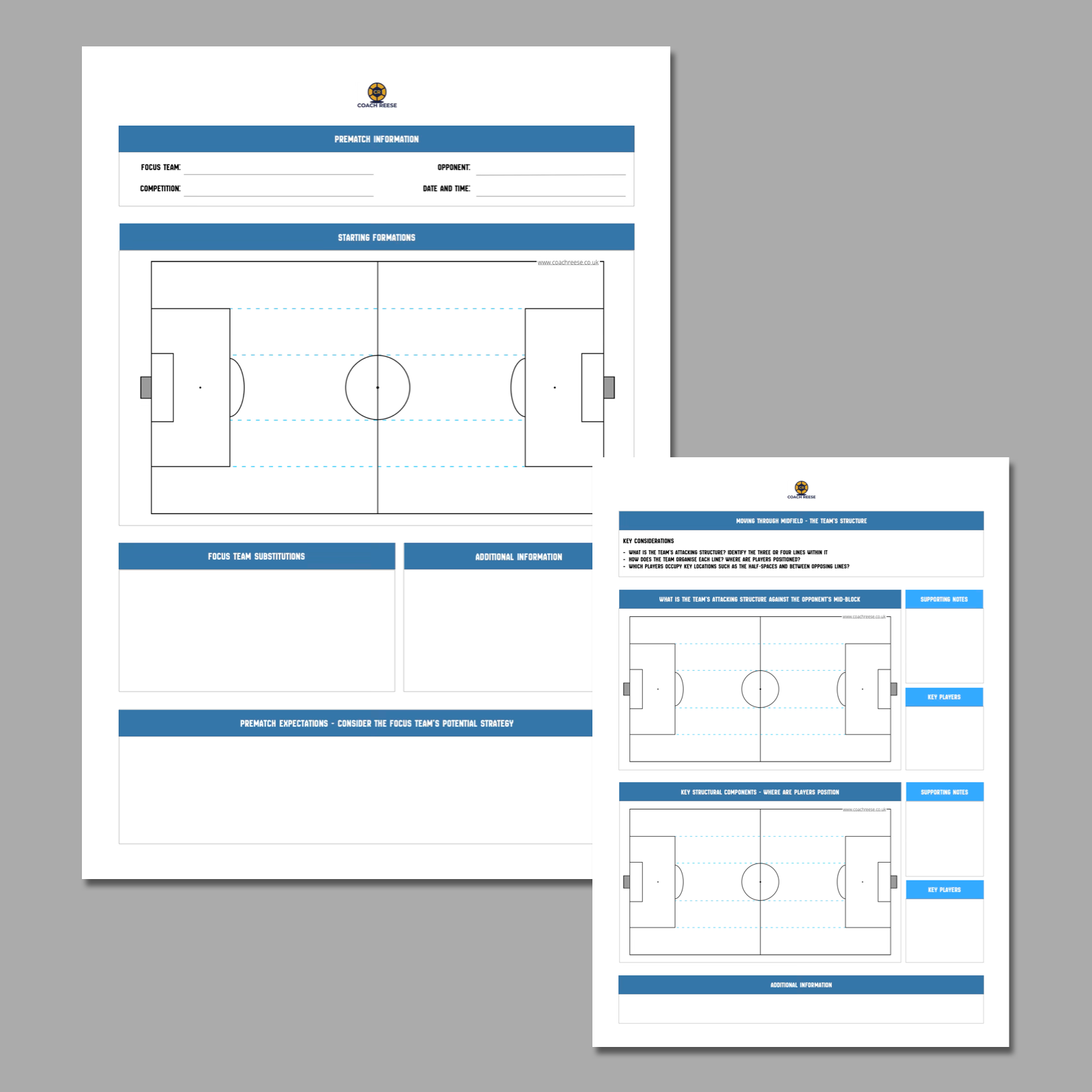
A practical match analysis template designed to help coaches and analysts structure their observations, identify patterns and understand what is happening in the game.
What are the teams trying to do?
How are they structured?
How do they build up?
How do they progress?
How do they create chances?
How do they defend?
How do they press?
What happens when possession changes?
And what can you learn from the game?
This Football Match Analysis Template provides a clear framework for analysing the match — helping you move from simply watching the game to understanding it.
Designed by a professional football coach and coach developer, it gives you a practical way to record observations, identify patterns and turn what you see into meaningful analysis.
Watch. Observe. Analyse. Understand.
MORE THAN WATCHING FOOTBALL
Watching a match is easy.
Understanding it takes a framework.
Good analysis goes beyond:
- Possession percentages
- Shots
- Corners
- Goals
- Formations
It asks why things are happening.
Why is one team able to progress?
Why is another struggling to build?
Where is space being created?
How are opponents being manipulated?
What triggers the press?
What happens after the ball is lost?
Don’t just describe the game. Understand it.
START WITH THE BIG PICTURE
Before analysing individual moments, understand the context of the game.
Consider:
- Teams
- Formation and structure
- Game model
- Tactical approach
- Opponent
- Game state
- Scoreline
- Key objectives
- Changes during the match
The bigger picture helps you understand the decisions that follow.
ANALYSE THE STRUCTURE
Formation is only the starting point.
Look at how each team actually behaves.
Consider:
- Starting positions
- In-possession structure
- Out-of-possession structure
- Width
- Depth
- Central occupation
- Player relationships
- Rotations
- Overloads
- Numerical advantages
- Space between and around units
What does the structure allow the team to do?
ANALYSE EVERY PHASE OF PLAY
Use the template to work through the game systematically.
BUILD-UP
How does the team start attacks?
- Goalkeeper involvement
- Centre-back positioning
- Full-back roles
- Midfield support
- Passing options
- Press resistance
- Playing through, around or over pressure
MOVING THROUGH THE PITCH
How does the team progress?
- Forward passes
- Ball carries
- Support
- Movement
- Third-player combinations
- Between-the-lines play
- Switching the point of attack
- Attacking space
CREATING & EXPLOITING SPACE
How does the team create opportunities?
- Width
- Depth
- Overloads
- Isolations
- Rotations
- Movement away from the ball
- Manipulating opponents
- Attacking the space created
CHANCE CREATION
How are chances created?
- Final-third entries
- Crosses
- Cut-backs
- Combinations
- Runs beyond
- 1v1 situations
- Through balls
- Second balls
- Finishing opportunities
DEFENSIVE ORGANISATION
How does the team defend?
- Defensive shape
- Compactness
- Distances
- Central protection
- Cover
- Balance
- Marking
- Controlling space
- Preventing progression
PRESSING
How does the team try to regain the ball?
- Pressing structure
- Triggers
- Direction of press
- Pressure on the ball
- Cover
- Screening
- Pressing traps
- What happens when the first press is beaten?
TRANSITIONS
What happens when possession changes?
Attack → Defence
- Reaction to losing the ball
- Counter-pressing
- Recovery runs
- Protecting central areas
- Stopping the counter-attack
Defence → Attack
- First action
- Playing forward
- Attacking space
- Counter-attacking
- Supporting the attack
- Securing possession
FOUR SPACES TO DRAW THE GAME
Sometimes the clearest way to explain what you see is to draw it.
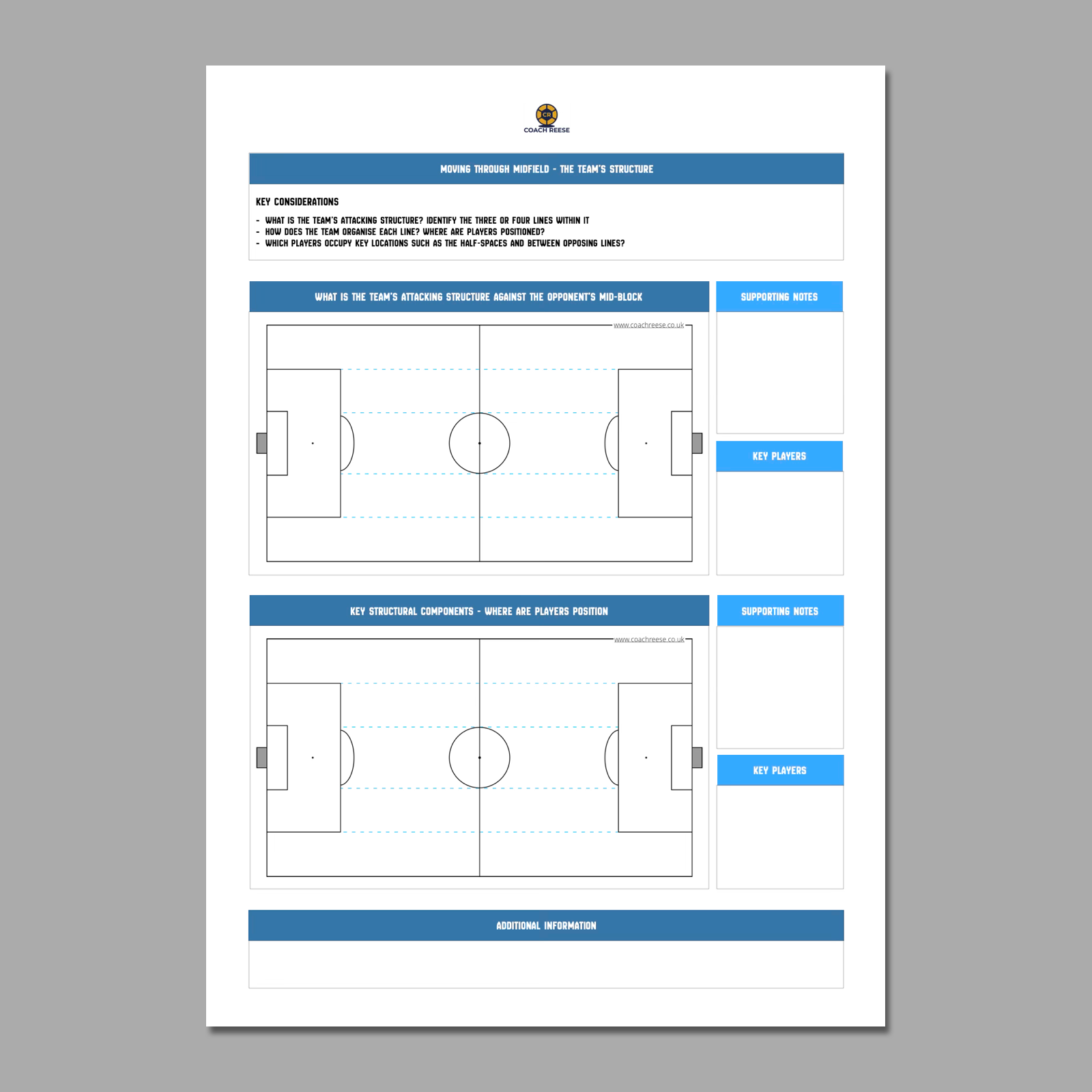
The template includes four dedicated diagram spaces to help you capture important moments from the match.
Use them to illustrate:
- Team structures
- Build-up patterns
- Pressing shapes
- Overloads
- Rotations
- Player movements
- Chance creation
- Defensive organisation
- Transitions
- Key tactical moments
See it. Draw it. Understand it.
ANALYSE THE PLAYERS
Team analysis and individual analysis should connect.
Consider:
- Positioning
- Movement
- Scanning
- Decision-making
- Passing
- Carrying
- Receiving
- Supporting
- Pressing
- Defending
- Transition behaviour
Ask:
What was the player trying to achieve?
What information did they have?
What decision did they make?
What happened next?
IDENTIFY THE PATTERNS
One moment can be interesting.
Repeated moments can reveal a pattern.
Look for:
- Repeated build-up solutions
- Consistent pressing triggers
- Common movements
- Recurring overloads
- Space repeatedly attacked
- Defensive weaknesses
- Successful combinations
- Transition opportunities
- Individual behaviours
What keeps happening?
That is where analysis becomes valuable.
STRENGTHS & WEAKNESSES
Move from observation to evaluation.
What does each team do well?
Where are they vulnerable?
Consider:
WITH THE BALL
- Build-up
- Progression
- Possession
- Chance creation
- Combinations
- Attacking space
WITHOUT THE BALL
- Organisation
- Compactness
- Pressing
- Protection
- Defending space
- Regaining possession
IN TRANSITION
- Reaction
- Counter-pressing
- Counter-attacking
- Recovery
- Game management
ANALYSE THE GAME STATE
The game changes as the score changes.
Consider how teams adapt when:
- Winning
- Losing
- Drawing
- Protecting a lead
- Chasing the game
- Playing against ten players
- Approaching half-time
- Approaching full-time
Does the team continue to play the same way?
Or does the game state change their decisions?
ANALYSE TACTICAL CHANGES
Matches evolve.
Record important changes such as:
- Formation changes
- Substitutions
- Positional changes
- Pressing changes
- Changes in build-up
- Changes in defensive organisation
- Changes in attacking approach
- Changes in response to the opponent
Most importantly:
Why did the change happen?
What effect did it have?
FROM OBSERVATION TO ANALYSIS
Use a simple process:
OBSERVE
What happened?
↓
DESCRIBE
What did the team or player do?
↓
IDENTIFY
What pattern can you see?
↓
INTERPRET
Why might it be happening?
↓
EVALUATE
Was it effective?
↓
APPLY
What can we learn from it?
This helps turn notes into meaningful football analysis.
BUILD YOUR ANALYSIS
Use the template to organise your thoughts throughout the match.
Record:
- Key observations
- Tactical patterns
- Important moments
- Player behaviours
- Strengths
- Weaknesses
- Opportunities
- Problems
- Tactical changes
- Questions for further analysis
Don’t try to write everything.
Identify what matters.
THE ANALYST’S QUESTIONS
Good analysis starts with good questions.
Ask:
How are they building?
Where are they trying to progress?
Where is the space?
How are they creating it?
How are they defending it?
What triggers the press?
What happens when the press is beaten?
Who creates the numerical advantage?
Who provides support?
Where are the opportunities in transition?
Which players influence the game most?
What changes when the score changes?
WATCH FOOTBALL DIFFERENTLY
The more you analyse, the more you begin to see.
You start noticing:
- Why players move
- Why space appears
- Why passes become available
- Why teams press
- Why formations change
- Why overloads work
- Why transitions create opportunities
- Why certain players influence the game
The game becomes more than what happens to the ball.
You begin to understand everything happening around it.
FOR COACHES
Use the template to:
- Prepare for opponents
- Review your own team
- Identify tactical problems
- Plan training
- Support player development
- Evaluate the Game Model
- Connect match analysis to practice
FOR PLAYERS
Learn to watch your position differently.
Understand:
- Your role
- Your teammates
- Space
- Opponents
- Decisions
- Movement
- Transitions
Don’t just watch your position. Understand the game around it.
FOR ANALYSTS & COACH DEVELOPERS
Create a consistent framework for observation.
Use it to:
- Structure analysis
- Identify patterns
- Record key moments
- Support reports
- Develop coaching conversations
- Connect analysis to player and team development
FOR THE FOOTBALL CURIOUS
You don’t need to be a professional analyst to understand football.
If you’ve ever asked:
Why did they do that?
Why is that player there?
Why can’t they play through the press?
Where did the space come from?
Why did the team change shape?
This template gives you a framework for finding the answers.
FROM THE PROFESSIONAL GAME
Created by a professional football coach and coach developer, this template is built around a simple idea:
Better analysis leads to better understanding.
And better understanding leads to better decisions.
TRUSTED BY PROFESSIONALS
Danny Röhl — Football Manager
Gaël Clichy — Former Manchester City & Arsenal player, Coach
Yohan Cabaye — Former Newcastle United & PSG player, Coach
Martin Devaney — Assistant Manager, Barnsley FC
Marlon Pack — Portsmouth Captain
Kenwyne Jones — Former Premier League player, Coach
Football ideas that can be understood, applied and developed.
UNDERSTAND THE GAME BEHIND THE GAME.
FOOTBALL MATCH ANALYSIS TEMPLATE
A practical framework for analysing:
- Team structure
- Formations
- Player roles
- Build-up
- Moving Through the Pitch
- Creating & Exploiting Space
- Chance Creation
- Defensive Organisation
- Pressing
- Transitions
- Game states
- Tactical changes
- Individual decision-making
- Patterns
- Strengths & weaknesses
For coaches. Players. Analysts. Coach developers. Fans. And football aficionados.
Watch more. See more. Understand more.
Reviews
There are no reviews yet.