
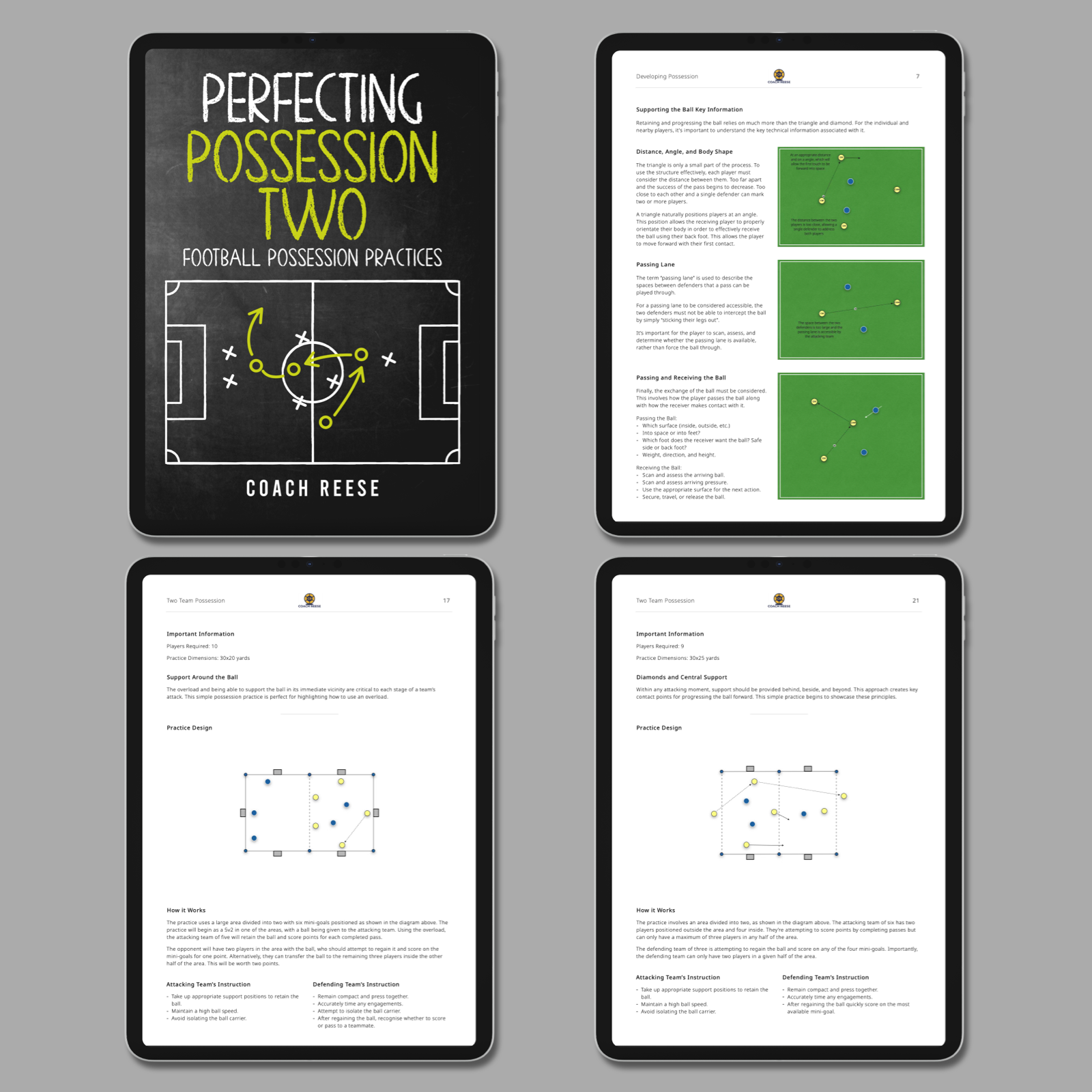
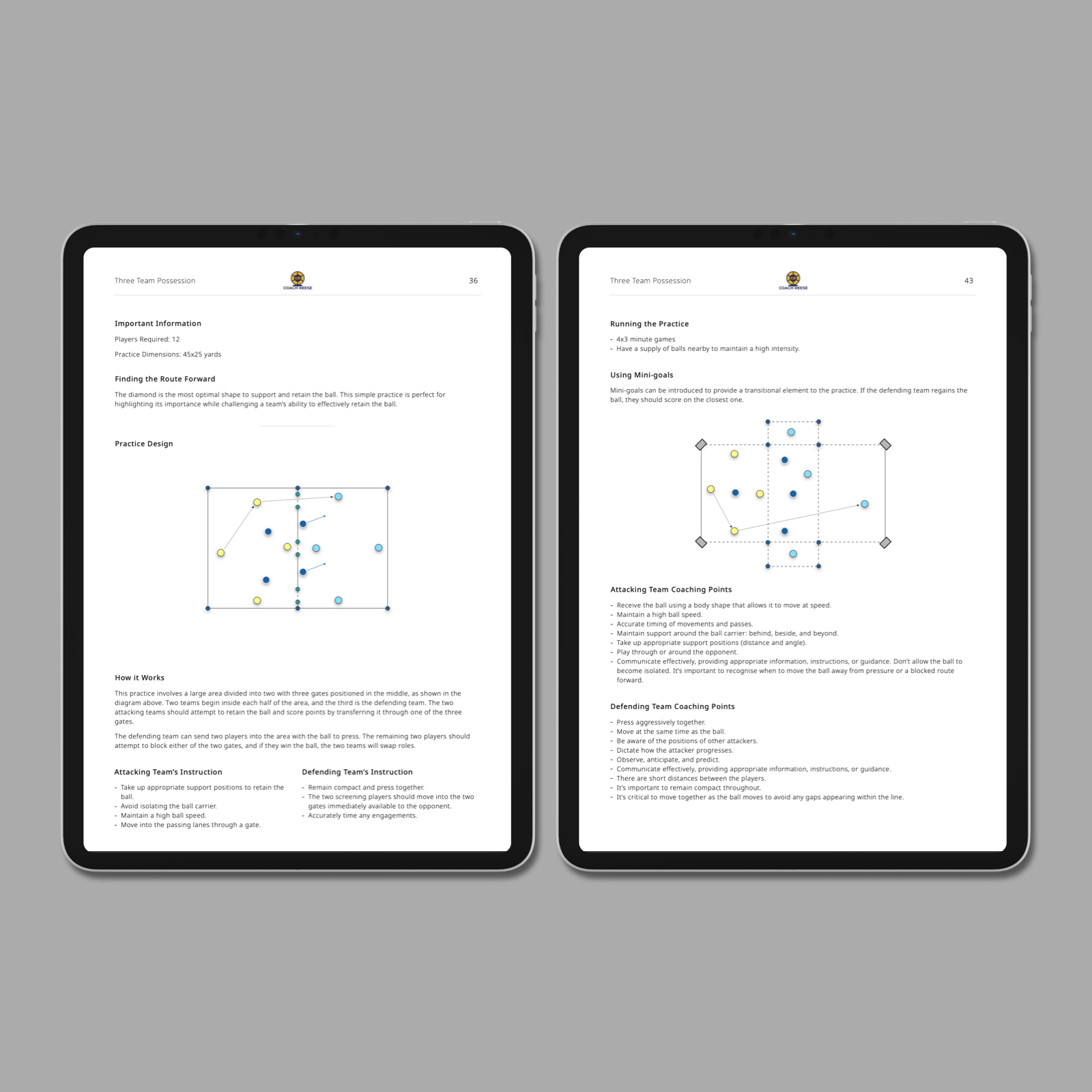
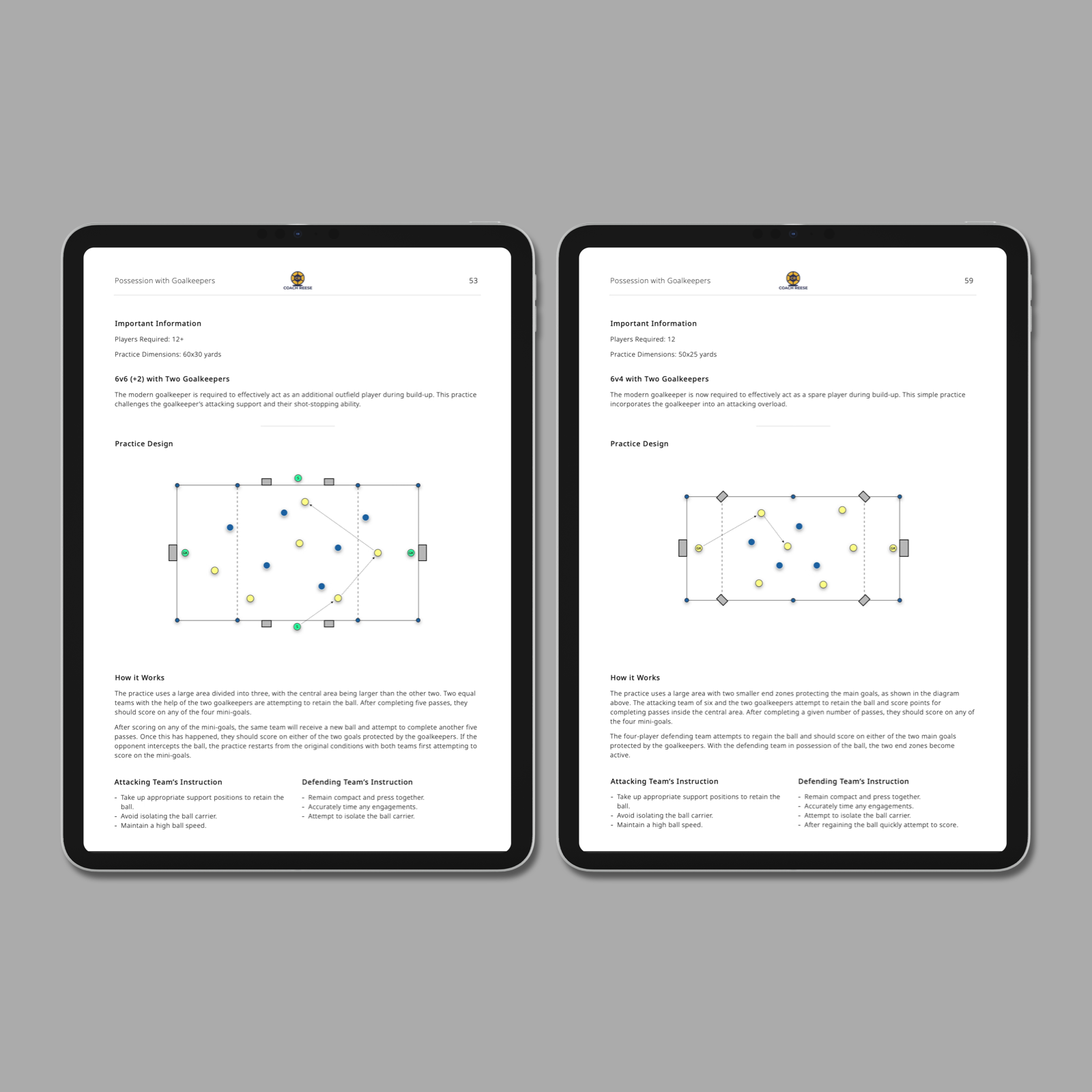
Description
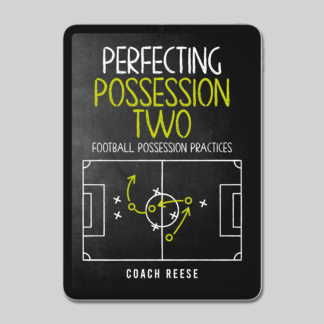
25 POSSESSION PRACTICES — BOOK 2
Keep the Ball. Control the Game.
The second collection of 25 practical, tested possession practices designed to develop players and improve their understanding of the game.
How do you help players keep possession under pressure?
How do you create better passing options?
How do you develop support around the ball?
How do you create angles?
How do you move opponents?
How do you play through pressure?
And how do you help players understand when to keep the ball, when to play forward and when to change the point of attack?
25 Possession Practices — Book 2 provides another collection of practical, tested practices designed to develop players through the game of possession.
Written by a professional football coach and coach developer, this second book builds on the principles of possession and provides coaches with more games and practices to challenge their players.
THE SECOND POSSESSION COLLECTION
Possession is more than simply keeping the ball.
It is about what you do with it.
Why are you keeping it?
Where can you play?
How can you create an advantage?
How can you move the opponent?
When should you circulate?
When should you penetrate?
And what happens when the opponent tries to take the ball away?
This second collection provides 25 new possession practices that challenge players to think, move, combine and make decisions.
25 PRACTICAL, TESTED PRACTICES
Every practice is designed to be:
Practical.
Challenging.
Game-related.
Adaptable.
Easy to understand.
Ready to use.
Take the practices onto the training pitch and create environments where players are constantly required to see, decide and act.
POSSESSION WITH A PURPOSE
Keeping possession for the sake of keeping possession isn’t enough.
Effective possession should help your team:
- Control the game
- Create space
- Move opponents
- Create numerical advantages
- Progress the ball
- Find forward passes
- Create chances
- Manage the game
- Prevent the opponent from attacking
The practices encourage players to understand that possession is a means to achieve an objective.
DEVELOPING THE WHOLE PLAYER
Possession practices can develop far more than passing.
Players are constantly challenged across multiple areas of performance.
TECHNICAL
Passing.
Receiving.
First touch.
Ball carrying.
Dribbling.
Combination play.
TACTICAL
Positioning.
Support.
Angles.
Distances.
Space.
Numerical advantages.
Progression.
Possession.
DECISION-MAKING
When to pass.
Where to play.
When to carry.
When to support.
When to move.
When to penetrate.
When to retain possession.
PHYSICAL
Movement.
Acceleration.
Deceleration.
Changes of direction.
Repeated actions.
PSYCHOLOGICAL
Concentration.
Awareness.
Confidence.
Problem-solving.
Composure under pressure.
SOCIAL
Communication.
Cooperation.
Support.
Responsibility.
Teamwork.
Develop the whole player through possession.
KEEPING THE BALL
Possession begins with the ability to retain the ball.
But retaining possession requires more than technical quality.
Players need to understand:
Where to position themselves.
How to create passing angles.
How far to support.
When to move.
How to receive.
Where the next pass might be.
How to protect the ball.
Develop the behaviours that help teams keep the ball under pressure.
CREATING SUPPORT
The player with the ball is only one part of possession.
The players around the ball matter just as much.
Develop:
- Support angles
- Distance from the ball
- Width
- Depth
- Forward support
- Behind-the-ball support
- Movement away from the ball
- Third-player support
- Rotations
- Passing options
Help players understand that good possession is a team action.
PLAYING THROUGH PRESSURE
Opponents don’t simply allow you to keep the ball.
They press.
They close space.
They block passing lanes.
They create pressure.
These practices challenge players to find solutions.
Can you play around the pressure?
Can you play through it?
Can you recognise when to change the point of attack?
Can you create a free player?
Develop players who can remain calm, aware and effective under pressure.
MOVEMENT & POSITIONING
Good possession requires good movement.
Players need to understand when to:
Move towards the ball.
Move away from the ball.
Create width.
Create depth.
Rotate.
Support.
Penetrate.
Create space for teammates.
Movement isn’t simply about running.
It is about creating better possibilities for the team.
CREATING PASSING OPTIONS
Every pass requires an option.
Every option is influenced by positioning.
The practices challenge players to constantly create and recognise:
- Passing lanes
- Supporting positions
- Forward options
- Angles
- Third-player options
- Spaces between opponents
- Opportunities to switch play
Help players understand that the next pass often begins with the movement before the ball arrives.
MANIPULATING THE OPPONENT
Possession can be used to move defenders.
Circulate the ball.
Move the opponent.
Create space.
Exploit the space.
Change the point of attack.
The practices encourage players to recognise how their positioning, movement and passing can manipulate the opposition.
WHEN TO PLAY FORWARD
Possession doesn’t mean always playing sideways.
Players need to recognise opportunities to penetrate.
When is the forward pass available?
When can you break a line?
When can you play between opponents?
When can you carry the ball forward?
When should you secure possession instead?
Develop players who can recognise the difference between keeping possession and progressing possession.
SWITCHING THE POINT OF ATTACK
Sometimes the best way forward is to go back.
Sometimes the best way to break pressure is to move the opponent and attack somewhere else.
Develop the ability to:
- Circulate
- Recognise pressure
- Secure possession
- Move opponents
- Switch play
- Attack the opposite side
Teach players to recognise where the opportunity is — not simply where the ball is.
THIRD-PLAYER COMBINATIONS
Possession is often about more than two players.
The third player can provide the solution.
Develop:
Pass.
Support.
Third-player movement.
Combination.
Penetration.
Help players recognise opportunities to use teammates to play through pressure and create advantages.
POSSESSION & TRANSITIONS
Possession doesn’t end when the ball is lost.
The moment possession changes, players must react.
What happens after losing the ball?
Can you counter-press?
Can you regain?
Can you delay the opponent?
Can you protect space?
And after winning it?
Can you play forward?
Can you attack quickly?
Can you secure possession?
The practices create opportunities to develop both sides of the transition.
DECISION-MAKING THROUGH POSSESSION
Possession creates constant decisions.
One touch or two?
Pass or carry?
Forward or sideways?
Keep it or penetrate?
Support or move away?
Combine or switch?
Play quickly or slow the game down?
Players learn by experiencing these decisions repeatedly.
The objective isn’t to give players every answer.
It is to create an environment where they can learn to find the answer.
SMALL-SIDED. HIGH INVOLVEMENT.
Smaller practices create more involvement.
More touches.
More passes.
More receiving actions.
More movement.
More decisions.
More pressure.
More transitions.
More opportunities to learn.
The practices are designed to keep players actively involved in the football.
ADAPTABLE TO YOUR PLAYERS
Every group is different.
Every player is different.
The practices can be adapted through:
- Pitch size
- Player numbers
- Numerical advantages
- Conditions
- Scoring systems
- Time
- Direction
- Targets
- Rules
Make the practice easier.
Make it harder.
Increase the pressure.
Create more space.
Reduce the space.
Change the objective.
Keep the practice. Change the challenge.
DEVELOPING GAME UNDERSTANDING
Possession practices provide an opportunity to develop more intelligent footballers.
Players learn to recognise:
Space.
Pressure.
Teammates.
Opponents.
Passing options.
Numerical advantages.
Forward opportunities.
Risk and reward.
The result is players who don’t simply receive and pass.
They begin to understand the game around the ball.
FOR EVERY LEVEL
These practices can be used across a range of environments.
Grassroots.
Academy.
Development football.
Senior football.
Elite environments.
The coach can adjust the challenge according to the players.
The principles remain.
The level of complexity changes.
FOR COACHES WHO WANT MORE POSSESSION PRACTICES
Sometimes you need another practice.
Another idea.
Another way of creating the same learning objective.
This book gives coaches 25 additional possession practices to add to their coaching toolbox.
Use them as:
- Main practices
- Possession games
- Technical-tactical practices
- Game-based practices
- Development activities
- Conditioned games
- Competitive practices
- Session components
Adapt them.
Combine them.
Build your sessions around them.
FROM TRAINING TO THE GAME
The purpose of possession practice is not simply to produce better training sessions.
It is to produce better footballers.
Players who can:
Receive under pressure.
Create angles.
Support teammates.
Recognise space.
Move opponents.
Play through pressure.
Progress the ball.
Make better decisions.
Keep possession with purpose.
Take the learning from the practice into the real game.
PRACTICAL. TESTED. READY TO USE.
These practices have been designed for the realities of coaching.
They are not complicated exercises that only work on paper.
They are practical, tested possession practices that can be taken straight onto the pitch.
Set it up.
Explain the objective.
Let the players play.
Observe.
Coach.
Adapt.
Develop.
25 MORE WAYS TO DEVELOP POSSESSION
25 practices.
25 different challenges.
Hundreds of decisions.
Thousands of actions.
Every practice creates another opportunity for players to improve their relationship with:
The ball.
Space.
Teammates.
Opponents.
The game.
TRUSTED BY PROFESSIONALS
The author’s eBooks are already being used and endorsed by professionals from the game.
Including:
Danny Röhl — Football Manager
Gaël Clichy — Former Manchester City & Arsenal player, Coach
Yohan Cabaye — Former Newcastle United & PSG player, Coach
Martin Devaney — Assistant Manager, Barnsley FC
Marlon Pack — Portsmouth Captain
Kenwyne Jones — Former Premier League player, Coach
Their use and support of the author’s work reflects the practical focus behind the books:
Football ideas that can be understood, applied and developed.
WRITTEN FROM THE PROFESSIONAL GAME
The author is a professional football coach and coach developer, bringing practical coaching experience and a passion for developing players into every practice.
The aim is simple:
Create better practices.
Create better learning environments.
Develop better players.
KEEP THE BALL. DEVELOP THE PLAYER.
25 POSSESSION PRACTICES — BOOK 2
25 practical, tested possession practices designed to develop players and improve their understanding of the game.
Possession.
Passing.
Receiving.
Support.
Movement.
Creating space.
Playing through pressure.
Progression.
Combination play.
Decision-making.
Transitions.
Game understanding.
Professional coaching insight.
For coaches. Players. Coach developers.
More practices. More decisions. More learning.
Keep the ball. Control the game.
Get your copy today.

Reviews
There are no reviews yet.